

Key Takeaways (Executive Summary)
- The Problem: A 6-day work week often yields less total output due to the “Law of Diminishing Returns” and cognitive fatigue.
- The Cost: High turnover, “presenteeism” (looking busy vs. being productive), and lack of innovation are hidden taxes on your P&L.
- The Solution: Shifting from hours-based management to outcome-based automation.
- The Strategy: Implementing smart tech infrastructure to eliminate the need for Saturday work.
In the early days of a startup, the “hustle” is inevitable. When you are a team of three in a basement, working six or seven days a week is often the only way to achieve liftoff.
But there is a dangerous myth in the business world that what gets you to launch is what will get you to scale.
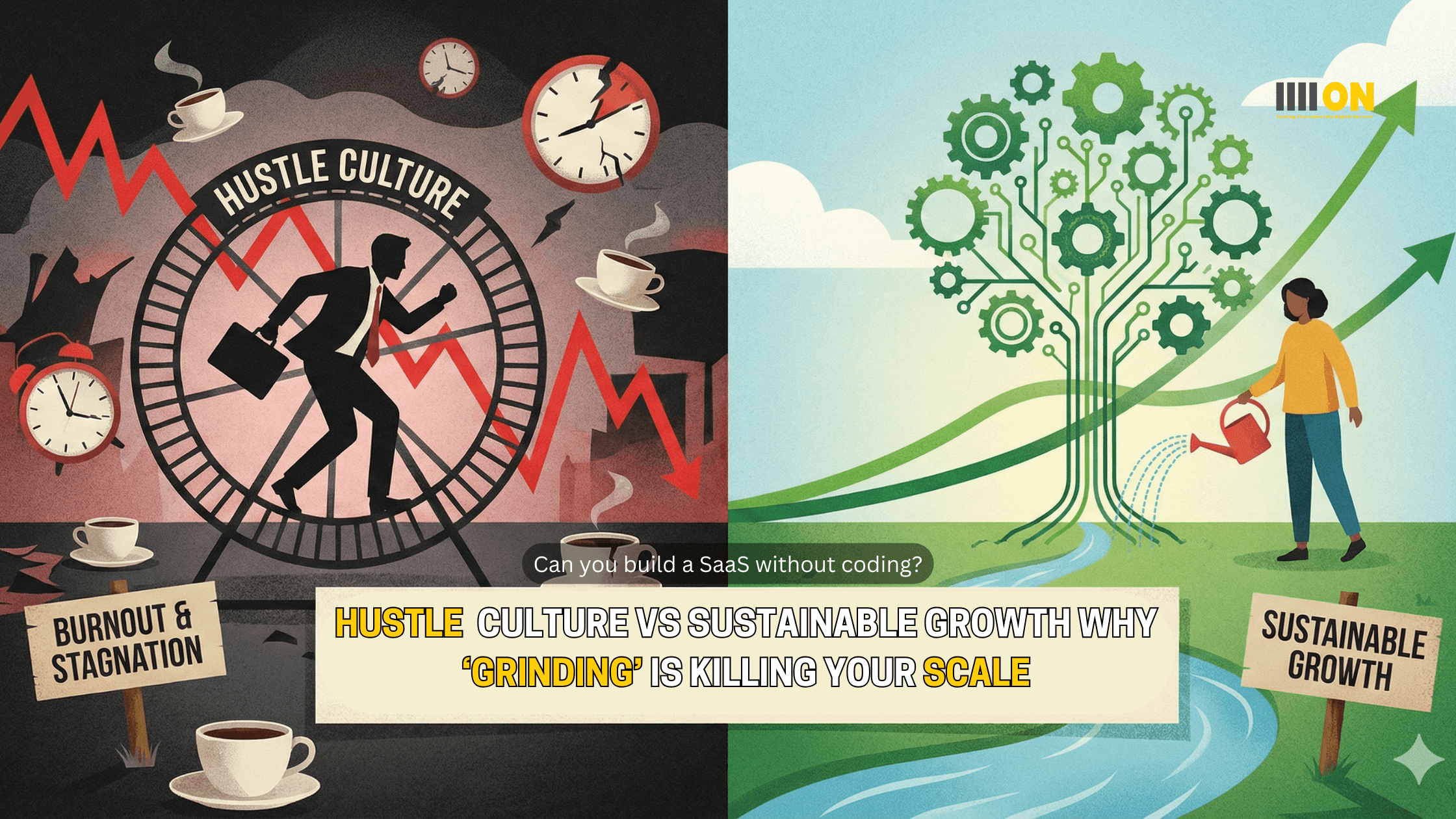
Many founders and CEOs cling to the 6-day work week as a badge of honor, believing that an extra day of operations equals a 20% competitive advantage. The reality? It’s usually the opposite. In 2025, systemic overwork isn’t a growth strategy; it is a liability that creates “fragile” companies—organizations that look busy but are actually breaking under their own weight.
Here is why the “grind” mindset might be the single biggest bottleneck to your company’s next level of growth.
1. The Innovation Killer: Tired Brains Don’t Disconnect
We often treat employees like machines: input hours, output code. If you want more output, you input more hours.
But cognitive science paints a different picture. The human brain operates on a curve concerning stress and performance, often illustrated by the Yerkes-Dodson Law. There is an optimal zone of “good stress” where productivity peaks. However, once you push past that peak—into the realm of a mandated 6-day week without recovery—performance doesn’t just plateau; it crashes.
When your team is constantly “on,” they lose the ability to think laterally. They stop looking for better ways to solve problems and settle for the fastest way to get the task off their desk.
- Rest: The brain processes background information and connects dot A to dot B (the “Eureka!” moment).
- Overwork: The brain enters survival mode, focusing only on the immediate threat (the next deadline).
2. The “Leadership Shadow” and Performative Work
As a leader, your schedule is not just your schedule—it is company policy.
If you are sending emails on Saturday afternoons or expecting Slack responses on the 6th day, you are casting a “Leadership Shadow.” Even if you tell your team, “You don’t have to reply until Monday,” the unspoken rule is clear: Dedication = Availability.
This creates a culture of Performative Work (or “Presenteeism”). Instead of focusing on outcomes (e.g., “Did we ship the feature?”), employees focus on optics (e.g., “Was my green dot active on Saturday?”).
You are paying for 100% of their time but likely receiving only 60% of their potential effort.
3. The Financial Leak: Churn Kills Momentum
The math of the “grind” fails when you factor in retention.
Let’s say you squeeze 20% more output from your team by working Saturdays. But, due to workplace fatigue and burnout, your star developer or top sales lead quits after 18 months.
- The Cost: It typically costs 1.5x to 2x an employee’s annual salary to replace them (recruitment fees, onboarding, lost knowledge).
- The Lag: It takes a new hire 3-6 months to reach full productivity.
In that 6-month transition gap, you have lost far more productivity than you ever gained from those extra Saturdays.
How to Scale Without the Saturday Shift
Moving from a 6-day to a 5-day week feels like a risk. You might ask: “If we drop a day, how do we hit our targets?”
The answer isn’t to work less; it’s to automate more.
The companies that scale in 2025 aren’t winning because they work longer hours. They are winning because they have built digital systems that do the heavy lifting for them. You cannot “hustle” your way out of inefficiency—you have to engineer your way out of it.
The Strategic Pivot: Operational Efficiency
To successfully transition to a high-output 5-day model, you need to replace manual “busy work” with intelligent technology. This is where IIIION SMART TECH steps in.
We don’t just build software; we build the infrastructure that gives you your weekends back.
At IIIION, we specialize in helping non-tech founders and offline businesses implement the digital systems needed to scale efficiently:
- Automate the “Boring” Stuff: We build custom SaaS solutions and internal tools that handle your repetitive reporting, data entry, and workflows. Let the code work 24/7 so your people don’t have to.
- Scale Your Tech, Not Your Stress: Need to ship a product fast? Our Fractional Tech Teams and Hybrid MVP Model allow you to launch new products in weeks, not months. You get the output of a full engineering department without the management overhead.
- Seamless Digital Transformation: We help traditional businesses move online, creating systems that run smoothly whether you are in the office or taking a well-deserved break.
The Bottom Line:
Stop measuring success by “days worked” and start measuring it by “systems built.” If you want a team that innovates on Monday, you need to give them space on Saturday. And if you need the tools to make that possible, we are ready to build them.
Frequently Asked Questions (FAQ)
Q: Does a 6-day work week actually increase productivity?
A: Short term, yes. Long term, no. Data suggests that after 50 hours of work per week, productivity per hour drops precipitously due to cognitive fatigue and error rates.
Q: How can I switch to a 5-day week without losing revenue?
A: Focus on “efficiency per hour.” Audit your meetings, automate repetitive tasks using custom software (like the solutions provided by IIIION), and move to an outcome-based performance model.
Q: What is the impact of overworking on employee retention?
A: Burnout is a leading cause of turnover. Replacing a skilled employee can cost up to 200% of their annual salary, making retention financially superior to overworking.